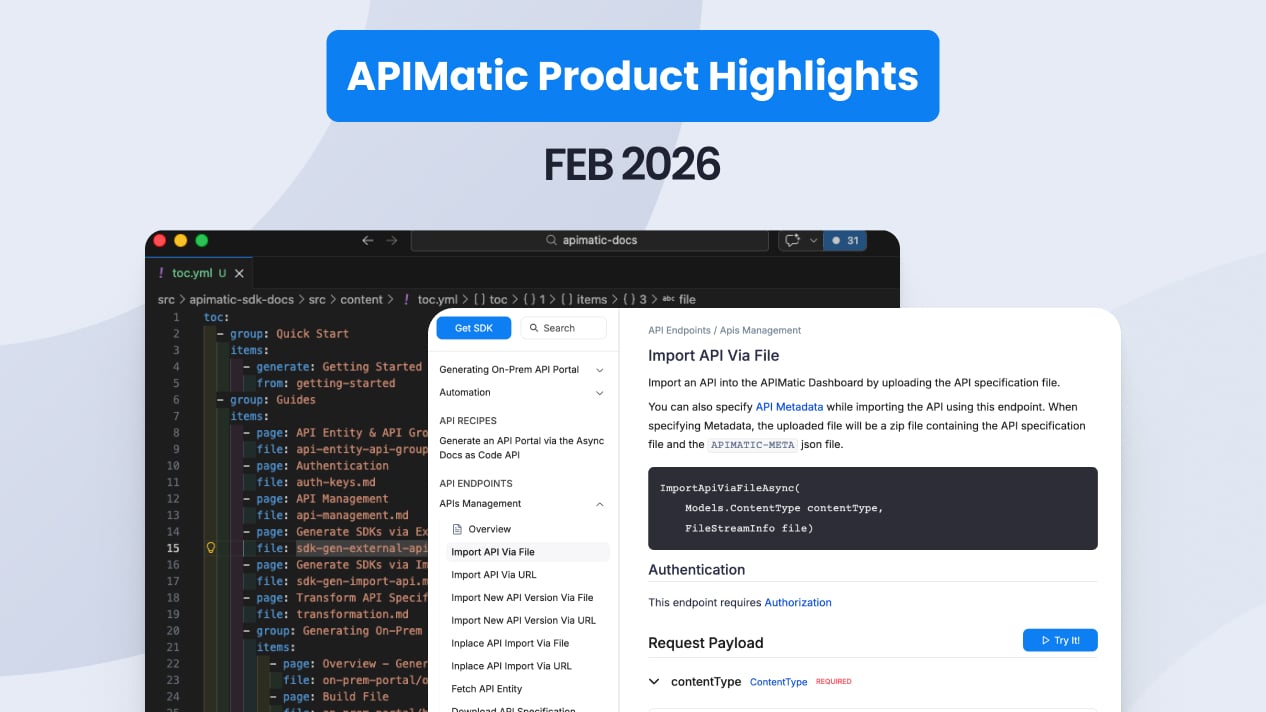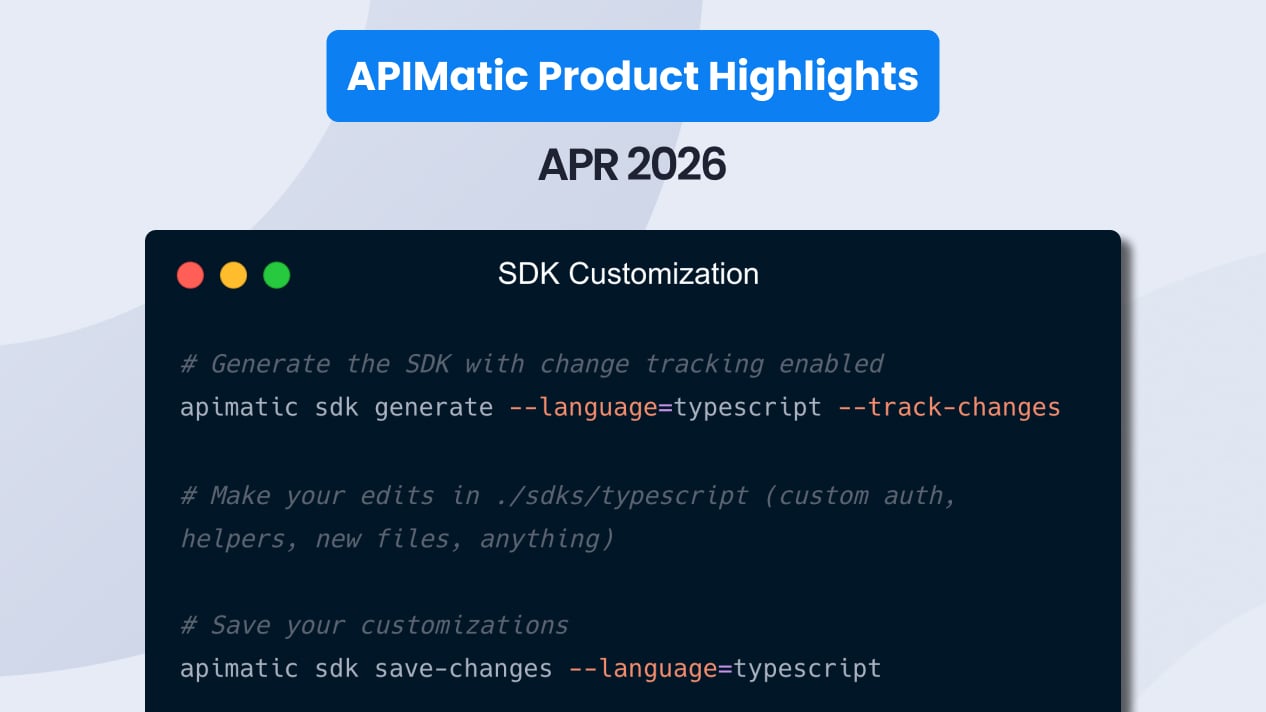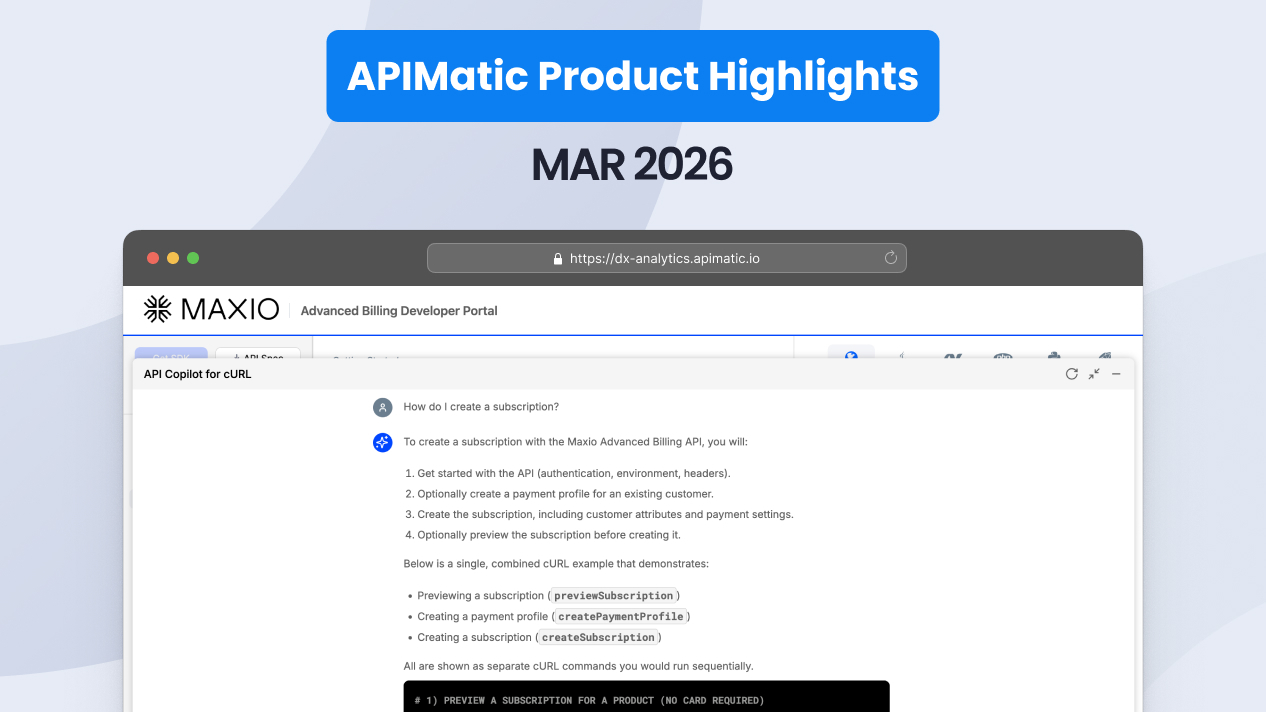


API documentation should not get in the way of developers exploring APIs. This month, we redesigned the API playground into a drawer-based experience that keeps your docs visible while developers test endpoints. We also shipped customizable layouts for custom content pages, sidebar icons, and several documentation quality improvements, in addition to typed error handling in code samples across five SDK languages.
Here's everything that shipped in January 2026.
🚀 Developer Portal Improvements
This month brings six major improvements to your developer portal experience, making documentation more accessible, flexible, and developer-friendly.
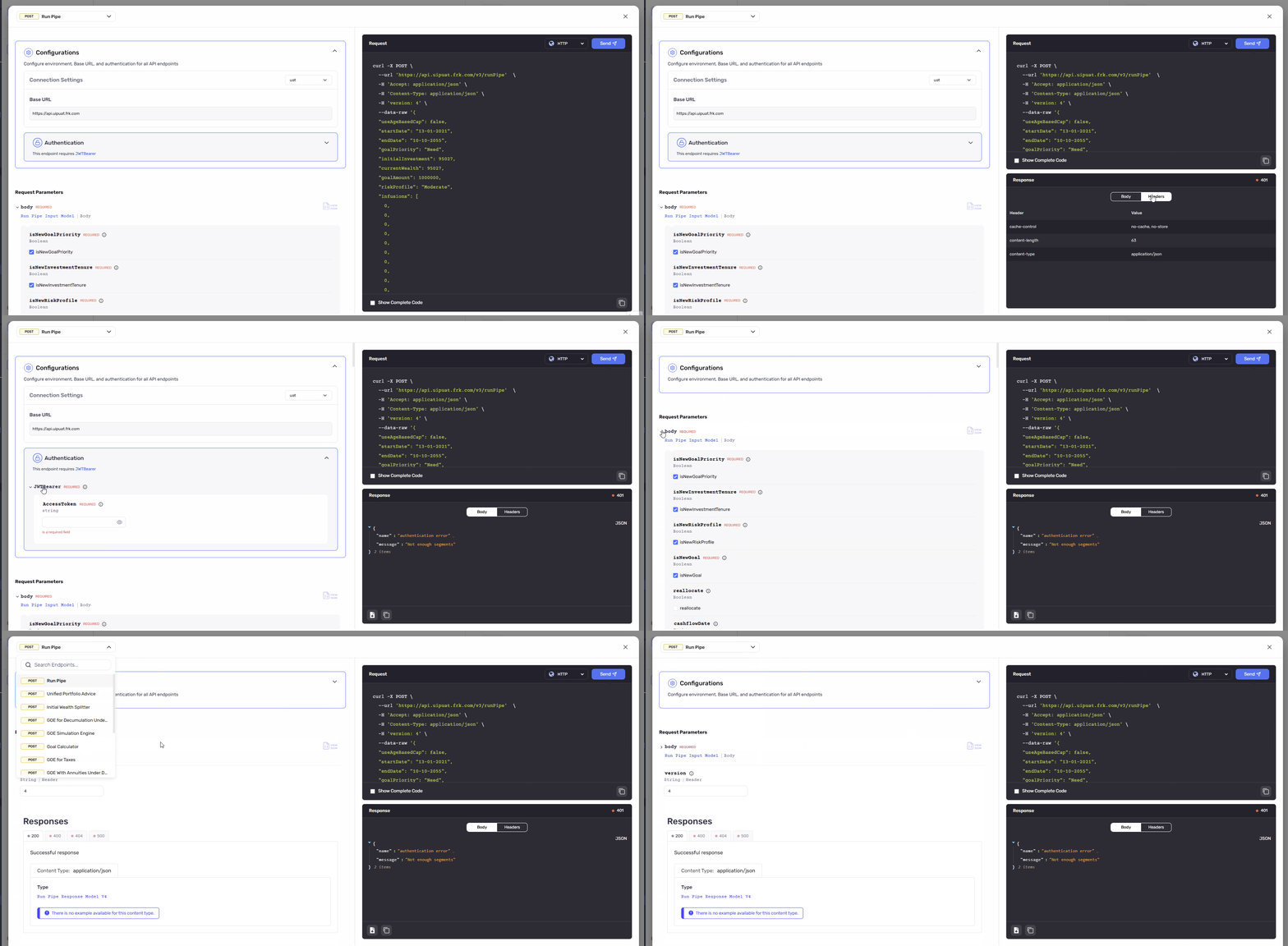
Redesigned API Playground Experience
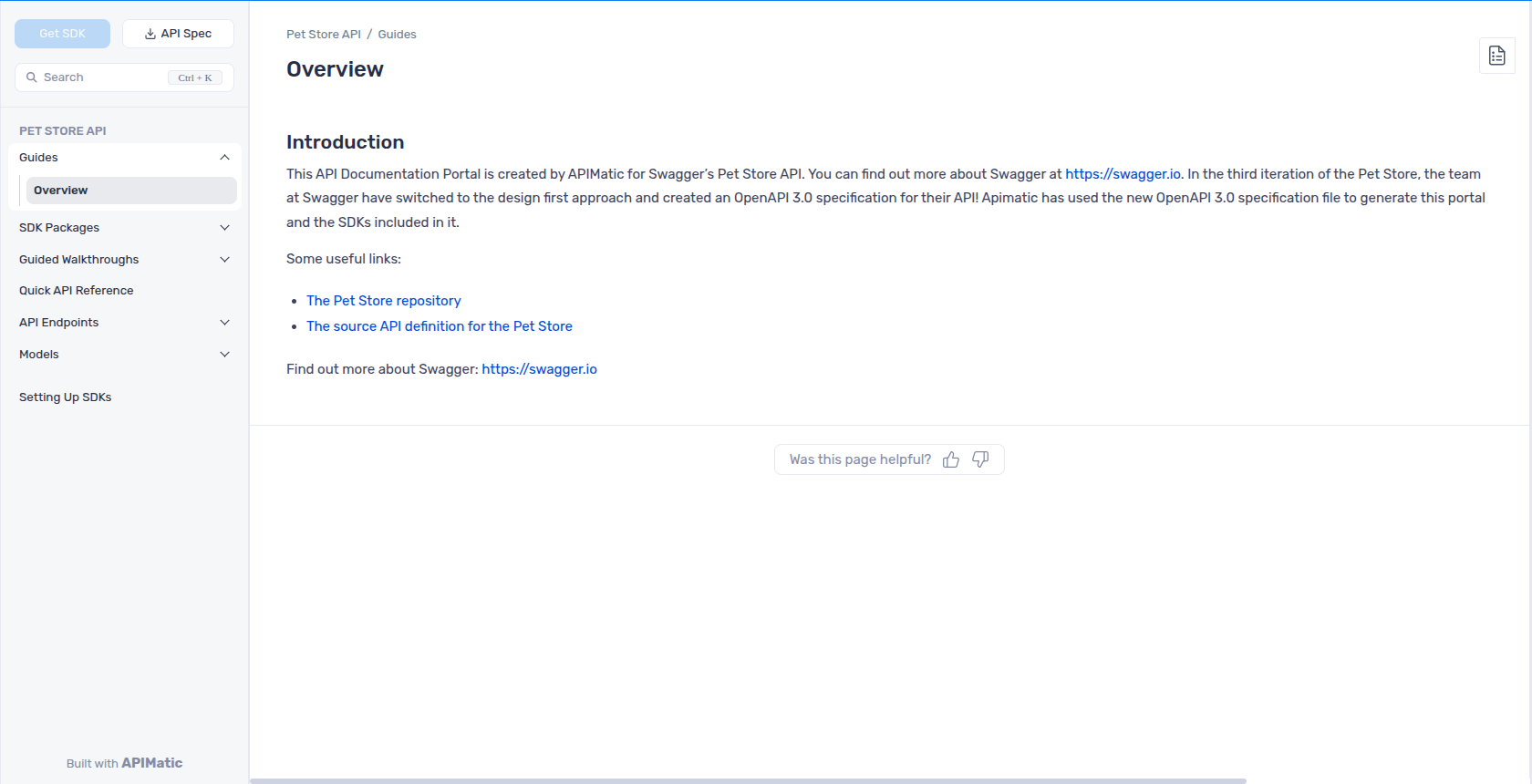
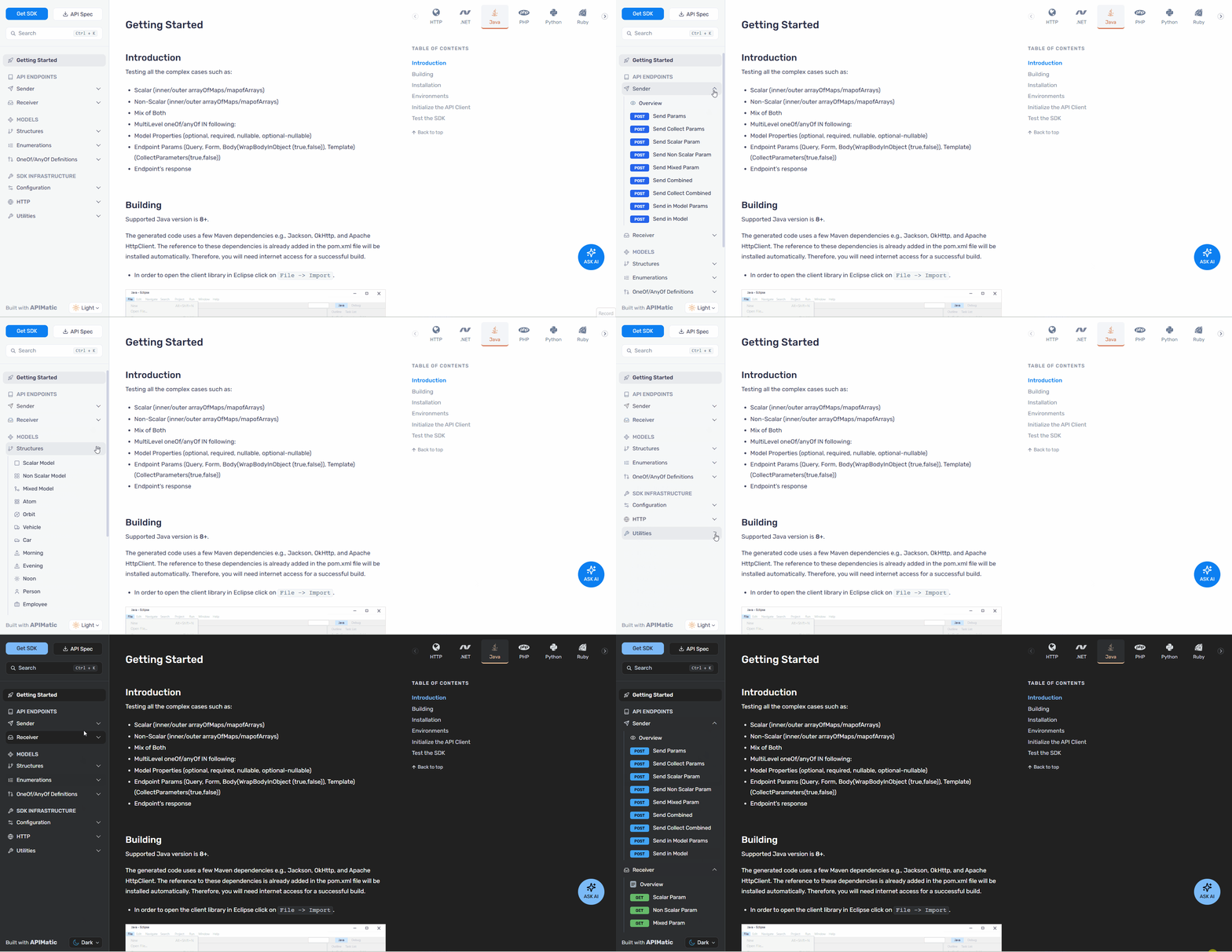
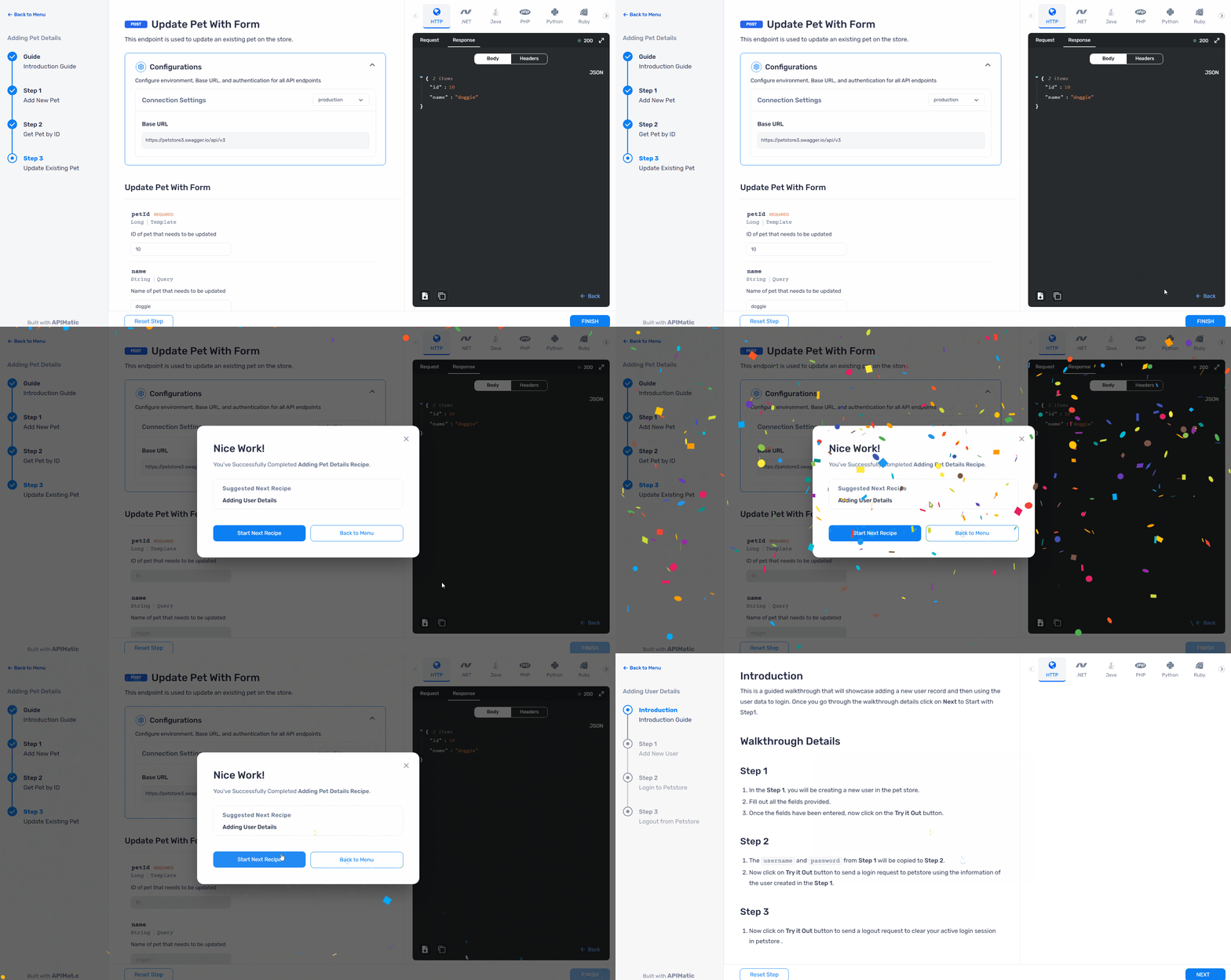
Your API playground now opens in a slide-out drawer, keeping endpoint documentation visible while developers test requests. No more scrolling back and forth between reference material and the testing interface.
🚀 Typed error handling in code samples across SDKs
Code samples for PHP, TypeScript, Java, .NET, and Go now include typed error handling, giving developers precise control over individual error scenarios.
Generic catch blocks tell developers that something went wrong. Typed error handling tells them exactly what went wrong and lets them respond accordingly.
Generated code samples now expose response status codes and headers prominently, use typed error branches where the language supports them, and follow idiomatic patterns for each language. Here's what that looks like in practice:
- PHP uses
instanceofchecks for specific exception types, giving granular control over individual error scenarios. Requires the "Map Error Types in Complete Response for PHP" setting. - TypeScript preserves error metadata logging while adding typed branches with
instanceofchecks, maintaining access tostatusCode,headers, andbodyproperties. - Go replaces generic
log.Fatalln(err)calls with type-switched error handling, including a default case for unexpected errors. - Java moves from generic stack trace printing to typed exception inspection using
exception.getCause()with branching to specific exception types. - .NET expands the single
ApiExceptionhandler withisoperator checks for specific exception types while maintaining message logging.
🔗 See the Error Handling documentation for code examples in each language.
🛠 Improvements
- Model documentation for collected parameters: For methods with long parameter lists, input fields are collected into a single model class rather than listing them individually. For instance, instead of documenting six separate parameters like
firstName,lastName,email,phoneNumber,address, andpreferences, the endpoint now shows a single required input:CreateUserProfileInput.The SDK documentation for Java, .NET, and Go SDKs now includes dedicated entries for these parameter collection classes. Endpoint documentation presents them as unified model references that match how the SDK actually works, making it easier to understand the method signature and prepare the required input structure.
This documentation improvement applies automatically when you regenerate your SDK.
🔗 See the Collected Parameters documentation for before/after examples.
- Consistent enum representation in SDK documentation: SDK documentation across Java, .NET, Go, TypeScript, Ruby, Python, and PHP now displays environment enumeration values consistently in the Getting Started section, matching the casing used in the SDK.
Enum casing in the Java model documentation has also been enhanced.
🔗 Learn more about this change in the changelog.
📢 Share your feedback
Your feedback makes our product better.
- 🐞 Found a bug? Report it here and earn eternal developer karma
- 💡 Got a brilliant idea? Jump on a call and share it before our product team claims they thought of it first
- 🎉 Love something we built? Tell us so we can argue less about what to build next
Reach our support team at support@apimatic.io